The Academy supports the development of credentialling work, to recognise professional competence and to ensure patient safety. The Academy developed the credentialling system to enable only those medical and dental professionals who are properly trained and have the requisite knowledge and experience to perform high-risk procedures in appropriate settings, Academy Colleges were fully engaged in the process through extensive consultation.
Since 2016, all Academy Colleges have set up own Credentialling Committee to identify and develop credentialled procedures for different specialties gradually. Credentialling is an on-going process that requires determination.
Application is open and would be accepted throughout the year. Fellows who wish to apply for initial credentialling may complete and return an Application Form. Application(s) will be reviewed in batches twice a year. The first batch will close on 31 March, and the second batch will close on 30 September.
As stated in the Guidelines, Category I covers the scope of Acute Ischaemic Stroke and therefore applicants applying for Category I do not require to apply for Category II. On the other hand, Category II is designed for those who would perform neurointerventional procedures for Acute Ischaemic Stroke only.
Supporting documents (e.g., operation records / radiological procedural records) for the applicant’s submitted cases claiming his / her role as the primary operator in the neurointerventional procedures should clearly indicate the roles of all operators involved. Should such documentation not be available, a completed and signed Case Record Form along with the supporting documents should be submitted for vetting.
Enquiries: [email protected]
Professionalism and ethics have become key topics of modern medicine and dentistry. Medical professionalism is the belief system that formulates and upholds the values and standards of medical practice. Changing expectations from patients and doctors as well as the introduction of disruptive technologies such as genomics and genetics, robotic surgery and big data analytics prompt us to re-think how medical professionalism should be articulated and inculcated in the contemporary era. The establishment of the Professionalism and Ethics Committee by the Academy in March 2019 is a response to the challenges.
The Committee is dedicated to:
The Committee organises a series of seminars and workshops covering a wide range of topics to enhance professional standards with ethical values and practices. It is committed to formulating best practice guidelines. To facilitate this, 6 Task Forces have been formed under the Committee to specialise in the areas of:

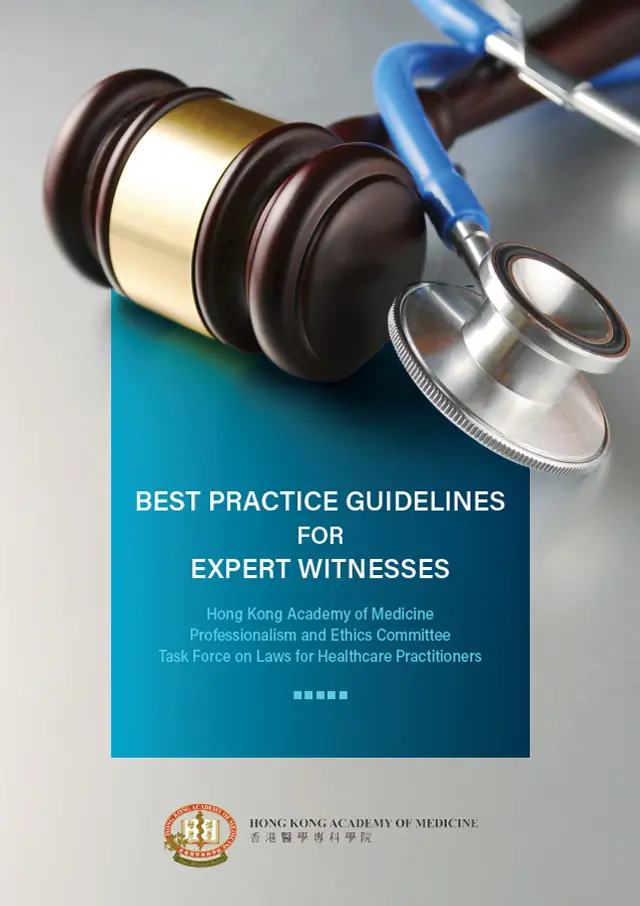

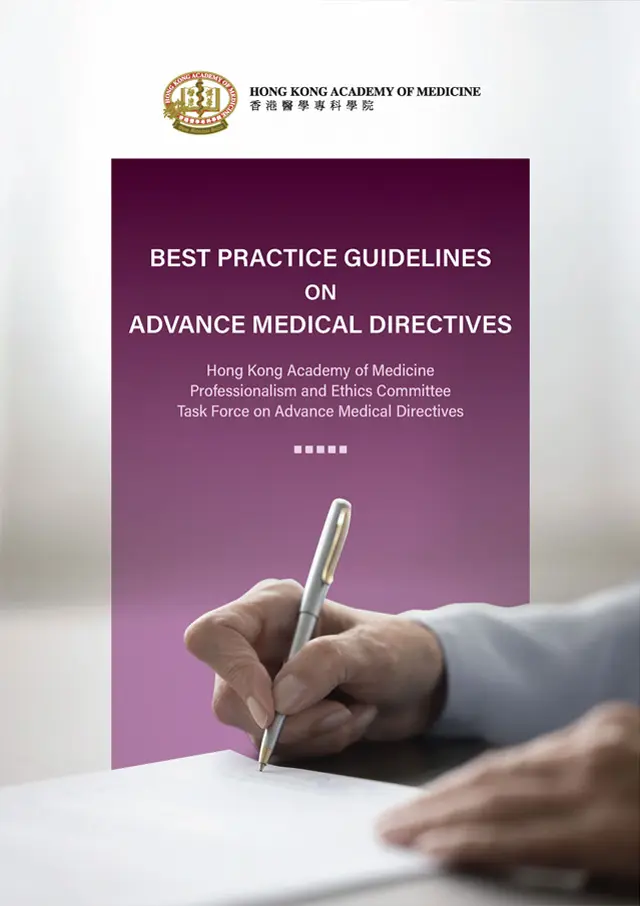
Note: The above BPGs are for guidance only and not intended to be prescriptive. They are developed from the perspectives of professionalism and ethics, on the basis of which medical and dental practitioners should exercise their clinical judgement, with regard to all clinical and other circumstances.

The training course aims to provide Academy Fellows who wish to join the league of competent expert witnesses with the necessary knowledge through the use of illustrative cases. It also serves as a refresher course for those who have already acted as expert witnesses. Click here for more details and to register for the course.
To provide Fellows who are interested in being expert witnesses with the opportunity to hone their report writing skills, workshops have been organised. Very good feedback has been received from both the coaches and the participants. Future workshops will be organised on demand.
The set of Guidelines aims to promote safe and evidence-based practices in procedural sedation. View and download Guidelines on Procedural Sedation.
View and download from Other Publications - Health Bureau